

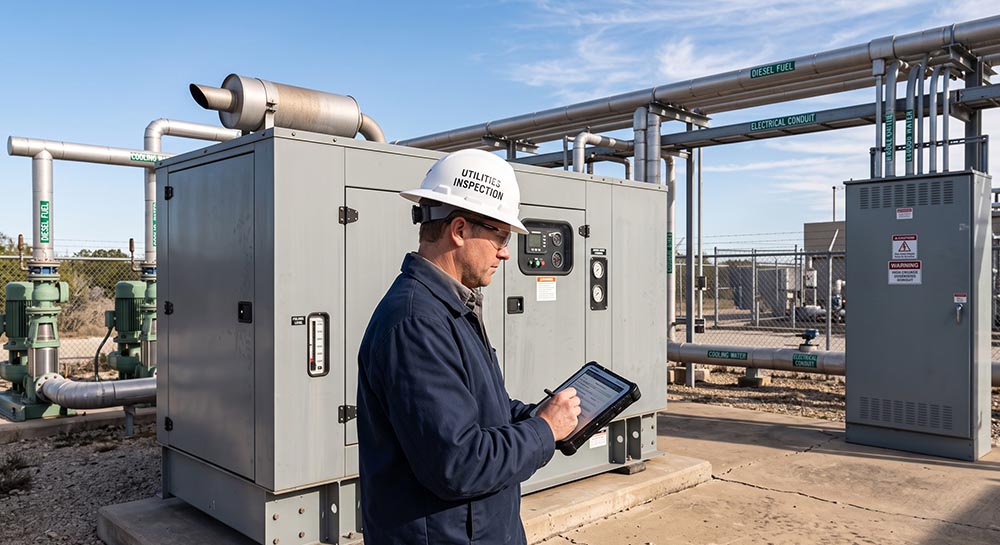
Plant hurricane readiness requires evidence that essential functions will remain available. A generator that starts successfully proves something useful about that generator; it leaves further questions about the equipment and services the plant needs.
On June 2, 2026, the U.S. Chemical Safety Board urged chemical facilities to prepare for hurricane hazards, including risks to critical safety systems. Its reminder pointed to the 2017 Arkema incident in Crosby, Texas, where flooding and loss of refrigeration led to a major chemical fire. The Atlantic hurricane season continues through November 30. CSB hurricane preparedness reminder
For Gulf Coast operators, I would use that reminder to examine the complete function the backup arrangement is meant to preserve. The question is whether the plant can maintain the required condition through a credible disruption.
Consider a hypothetical vessel whose safe condition depends on cooling. The cooling pump may have backup electricity, but its usefulness also depends on a water source, an available flow path, and the controls that establish the required operation. The team needs to understand which of those dependencies could be lost together.
The same reasoning applies to other essential functions. Two components may share a room vulnerable to flooding, a power distribution point, or a service that becomes unavailable during the event. The presence of a spare does not by itself establish that it will survive the initiating condition.
A useful review follows one function from its energy and utility sources to the physical result it must achieve. Include the instruments that confirm the result and the people needed to respond. Evaluate the arrangement against site-specific weather and flooding scenarios, using qualified personnel and approved assessment methods.
Plant hurricane readiness includes recovery
The return of utility power can create pressure to restart. It does not establish that instruments, protective functions, communications, and supporting services have all recovered to an acceptable condition.
Before a disruption, define what evidence the authorized team will need for a return-to-service decision. That may include the condition of affected electrical and instrument equipment, the status of temporary changes, available utilities, and completion of the applicable readiness reviews. The evidence must match the actual damage and operating state.
A planned turnaround offers a useful discipline here: distinguish completed work from demonstrated readiness. Assign responsibility for unresolved items and make the decision criteria explicit. A weather event adds uncertainty because the extent of damage and the sequence of recovery may be less predictable.
Test the assumptions with the people who depend on them
A tabletop exercise can expose gaps before a storm does. Ask what happens if access to a critical area is restricted, if communications are intermittent, or if a supplier cannot arrive when expected. Examine how those conditions affect the planned response and the evidence available to decision-makers.
Where functional testing is appropriate, plan it under the facility’s established engineering and safety controls. Choose the test to answer a defined question about capability. Record which dependencies were included and which were assumed, so a successful test is not credited with proving more than it actually demonstrated.
I would start with one function whose loss could have serious consequences and ask its owner to explain how it remains available through a disruption. Where the answer depends on an unverified assumption, there is specific work to do before relying on that arrangement.